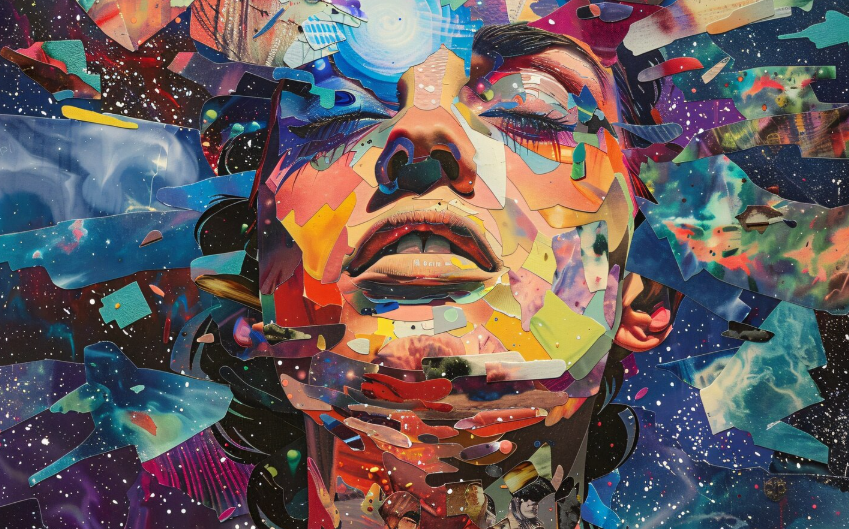
Artificial intelligence is redefining what it means to create with AI art ethics sitting at the center of this shift. From AI-generated paintings and songs to digital collaborations between humans and machines, the art world is transforming as profoundly as the invention of photography or the printing press.
However, as algorithms learn to mimic creativity, questions arise: Can a machine truly make art? And what happens to human expression in a world where anyone can generate beauty with a prompt?
The age of AI art isn’t replacing artists. It’s reshaping what art is.
How AI Became an Artist
The rise of AI in creative fields began with machine learning models trained on vast datasets of images, music, and text. Tools like DALL·E, Midjourney, and Runway can now produce original works in seconds, whether it be portraits, landscapes, or even movie scenes, all on written instructions. Meanwhile, music AIs compose entire albums, and literary models draft poetry indistinguishable from human verse.
This automation challenges traditional definitions of creativity. Historically, art was valued for its human touch. It was about the interpretation, emotion, and imperfection behind it. But AI can replicate style and technique with mathematical precision. Some view this as a democratization of art; others see it as a dilution of art.
What’s undeniable is that AI has expanded what’s possible. Artists now collaborate with algorithms as creative partners, blending human intuition with machine speed to push boundaries of form and imagination.
See Mindful Tech Use: Using AI & Apps Without Losing Control for practical ways to keep creative tools working for you
The New Collaboration Between Human and Machine
Rather than replacing artists, AI often serves as a creative amplifier. Designers use it to brainstorm visual concepts. Filmmakers generate storyboards and soundscapes. Musicians feed ideas into algorithms to explore melodies they wouldn’t have imagined alone.
This partnership echoes the early adoption of digital tools, which were once controversial and are now essential. AI is simply the next instrument in the creative toolkit. The difference is that this instrument learns, adapts, and occasionally surprises its user.
The key distinction remains authorship. While an algorithm can generate output, it’s the human who curates meaning. The spark of intention. The why behind creation. This is what still belongs to people.
Check How Streaming Changed the Way We Tell Stories to understand how technology reshapes storytelling.
Ethics, Ownership, and Authenticity
With the rise of AI art comes complex ethical questions. Who owns an AI-generated work? The user, the developer, or the dataset it learned from? And what about the artists whose styles were used to train these models without consent?
The U.S. copyright laws are scrambling to keep up. Courts in the U.S. and abroad are debating whether art without a human author can be protected at all. Meanwhile, galleries and publishers wrestle with how to label and price AI-assisted pieces.
Authenticity, once tied to human effort, is being redefined. In this new landscape, transparency becomes the currency of trust. Viewers increasingly value knowing how a work was created as much as the final result.
The Democratization of Creation
Despite controversy, AI has made art more accessible than ever. People with no formal training can now visualize ideas, compose music, or design worlds in minutes. This empowerment blurs the line between artist and audience.
Yet as creative tools become easier to use, originality gains new importance. The artists who stand out will be those who use AI not to imitate, but to innovate. It’s about those who infuse the machine’s logic with human imagination.
Try Digital Declutter: Reclaiming Focus in an Always-On World to streamline your research workflow.
What the Future Holds
Art in the age of AI is not a battle between human and machine. It’s a conversation. The future will likely see hybrid exhibitions, interactive installations, and algorithmic collaborations that expand our understanding of what creativity entails.
Ultimately, art’s essence remains unchanged: it’s still about expression, meaning, and connection. Whether drawn by hand or rendered by code, the purpose of art is to make us feel. And no algorithm, not yet, anyway, can fully replicate that.